
Soil Testing Before Biofertilizers: A Farmer’s Planning Guide
Introduction
Healthy soil is essential for successful farming. Before choosing agricultural inputs, farmers should understand their soil’s nutrient levels, pH, organic matter, and overall condition. Soil testing provides useful information that helps farmers make better decisions and manage their fields efficiently.
Soil testing before biofertilizers is an important planning step because it helps identify nutrient deficiencies and soil conditions that may influence the performance of beneficial microorganisms. Instead of selecting products randomly, farmers can use soil test results to choose suitable biofertilizers for their crops.
In this guide, we explain why Soil testing before biofertilizers matters, how to collect a soil sample, how to understand test results, and how to plan biofertilizer applications for healthier crops.
What Is Soil Testing?
Soil testing before biofertilizers is the process of examining a soil sample in a laboratory to determine its chemical and physical properties. Depending on the test, it can provide information about soil pH, electrical conductivity, organic carbon, and available plant nutrients.
The results help farmers understand whether their soil requires specific nutrients or improvements before planting.
Important Soil Parameters
1. Soil pH
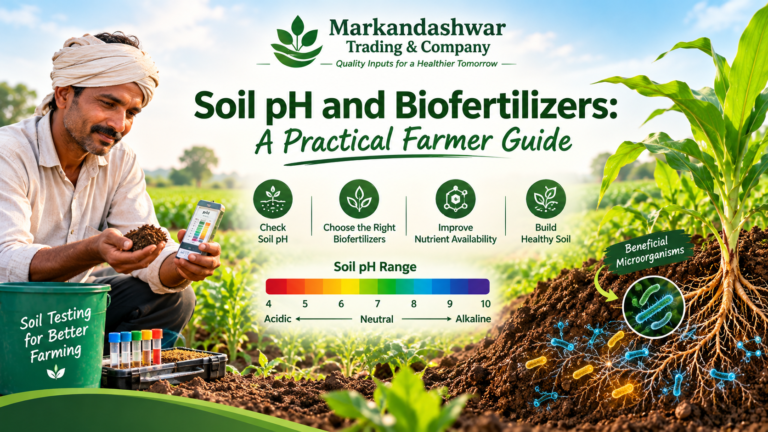
Soil pH indicates whether soil is acidic, neutral, or alkaline. It influences nutrient availability and the activity of many soil microorganisms.
2. Nitrogen
Nitrogen is essential for leaf development and plant growth. Soil testing before biofertilizers and crop-specific recommendations can help farmers plan nitrogen management.
3. Phosphorus
Phosphorus supports root development, energy transfer, and reproductive growth. Its availability depends partly on soil pH and other soil properties.
4. Potassium
Potassium supports water regulation, enzyme activity, and plant resilience.
5. Organic Carbon
Soil organic carbon is associated with soil structure, water retention, and biological activity.
6. Electrical Conductivity
Electrical conductivity helps indicate the concentration of soluble salts in soil. High salinity can affect plant growth and microbial performance.
Understanding these parameters makes soil testing before biofertilizers more useful for selecting appropriate agricultural products.
Why Is Soil Testing Important Before Using Biofertilizers?
Biofertilizers contain beneficial microorganisms that support processes such as nitrogen fixation and nutrient availability. However, their performance depends on several factors, including soil conditions, crop type, moisture, and product quality.
1. Identifying Nutrient Deficiencies
Soil testing before biofertilizers helps identify nutrient levels that may be inadequate for a particular crop. This information can guide farmers in selecting suitable biofertilizers and other nutrient inputs.
For example, phosphate-solubilizing microorganisms may be considered as part of a phosphorus management plan when appropriate. However, they cannot replace every phosphorus fertilizer requirement.
2. Understanding Soil pH
Different microorganisms perform best under different environmental conditions. Strongly acidic or alkaline soil may limit the activity of certain beneficial microbes.
Using soil testing before biofertilizers helps farmers recognise pH-related limitations and seek suitable corrective recommendations where necessary.
3. Choosing the Right Product
Not every biofertilizer is suitable for every crop. Soil information, crop requirements, and product labels help farmers make a more informed selection.
4. Avoiding Unnecessary Input Costs
Testing can reduce guesswork and help farmers avoid applying inputs that are not needed. It also supports better planning for fertilizers, soil amendments, and other agricultural products.
5. Improving Nutrient Management
Soil testing before biofertilizers results provide a starting point for developing a balanced nutrient management plan. Biofertilizers can complement other practices, including organic matter management and recommended fertilizer applications.

How to Collect a Soil Sample Correctly
Accurate results depend on collecting and handling soil samples properly. Follow these steps before submitting a sample to a recognised soil testing laboratory.
Step 1: Divide the Field into Similar Areas
Separate fields with noticeably different soil types, cropping histories, slopes, or management practices. Test these areas separately when appropriate.
Step 2: Remove Surface Debris
Remove leaves, crop residues, stones, and other debris from the sampling spot. Avoid collecting soil directly from unusual locations such as manure piles, compost heaps, field edges, or fertiliser spills.
Step 3: Collect Soil from Several Spots
Collect samples from several representative spots within the same management area. Use the sampling depth recommended by your laboratory or local agricultural department. For many routine cultivated-field tests, topsoil is sampled from the plough layer.
Step 4: Mix the Samples
Mix the collected soil from the same area in a clean container. Remove stones and large plant residues. Follow the laboratory’s instructions for preparing the final sample.
Step 5: Label the Sample
Record the field name, crop, sampling date, and relevant field history. Keep samples from different areas separate.
Step 6: Submit It for Testing
Send the sample to a recognised soil testing laboratory. Request tests relevant to your crop and local recommendations.
Correct sampling is a key part of soil testing before biofertilizers because unrepresentative samples can lead to unsuitable management decisions.
How to Read a Soil Test Report
A Soil testing before biofertilizers report usually includes measured values, interpretations, and recommendations. The reporting format varies between laboratories, so farmers should follow the guidance provided with their results.
Pay attention to the following:
- pH: Helps identify acidic or alkaline soil conditions.
- Nutrient status: Shows whether tested nutrients are low, adequate, or high according to the laboratory’s interpretation.
- Organic carbon: Provides information about the soil’s organic matter status.
- Electrical conductivity: Helps assess soluble salt levels.
- Recommendations: Indicates possible nutrient applications or corrective measures.
Do not interpret one result in isolation. Crop requirements, soil type, irrigation water, and previous fertilizer applications may also influence the final plan.
Selecting Suitable Biofertilizers After Soil Testing
Once you understand your soil test report, consider the crop, nutrient requirement, and purpose of the product.
Rhizobium
Rhizobium is commonly used with compatible legume crops. It forms a beneficial association with plant roots and helps fix atmospheric nitrogen.
Azotobacter
Azotobacter is a free-living nitrogen-fixing bacterium used in certain agricultural systems. Product suitability depends on the crop and recommended use.
Azospirillum
Azospirillum is associated with the roots of several grasses and cereal crops and may contribute to plant growth and nitrogen nutrition.
Phosphate-Solubilizing Bacteria
Phosphate-solubilizing bacteria can help make certain forms of phosphorus more available to plants. Their effectiveness depends on soil conditions and the particular product.
Other Microbial Products
Some products contain microorganisms intended to support potassium mobilisation or other nutrient-related processes. Check their stated function, crop suitability, and application directions.
The purpose of soil testing before biofertilizers is not simply to buy more products. It is to help select suitable inputs based on actual field requirements.
A Practical Biofertilizer Planning Checklist
Farmers can use this checklist when preparing for the next crop.
- Arrange Soil testing before biofertilizers major nutrient management decisions.
- Review the report with an agricultural specialist if any results are unclear.
- Identify crop-specific nutrient requirements.
- Select a suitable biofertilizer for the crop and intended purpose.
- Check the product’s expiry date, storage instructions, and quality information.
- Follow the recommended dosage and application method.
- Check compatibility before combining microbial products with pesticides or chemical fertilizers.
- Maintain appropriate soil moisture and follow good crop management practices.
- Monitor crop growth and review the management plan when needed.
Following this process makes soil testing before biofertilizers a practical part of sustainable farm planning.
Common Mistakes to Avoid
Farmers should avoid several mistakes when planning soil testing and microbial inputs.
Skipping soil testing: Guessing nutrient requirements may lead to inappropriate applications.
Using one sample for different fields: Different soil conditions may require separate samples.
Choosing products without checking crop suitability: Microbial products have different purposes and are not universally interchangeable.
Ignoring storage conditions: Poor storage can reduce the viability of microorganisms.
Expecting immediate results: Biofertilizers support biological processes, and visible responses vary with field conditions.
Replacing all fertilizers without advice: Biofertilizers do not automatically supply every nutrient required by a crop.
Ignoring product instructions: Always follow the label and locally recommended practices.
Benefits for Sustainable Agriculture
When properly planned, soil testing and biofertilizer use can support informed decisions about soil fertility. Farmers can identify potential nutrient problems, select appropriate microbial products, and integrate them into a balanced crop nutrition programme.
Soil testing before biofertilizers may also help improve input planning by reducing unnecessary applications and highlighting conditions that require attention.
However, results are not guaranteed. They depend on soil characteristics, weather, crop variety, product quality, and correct application. Soil testing before biofertilizers should be combined with appropriate irrigation, crop rotation where suitable, organic matter management, and expert recommendations.
Conclusion
Soil testing before biofertilizers is an important first step towards informed crop nutrition and soil management. It provides information about nutrient levels, pH, salinity, and other properties that influence crop growth and microbial activity.
By practising soil testing before biofertilizers, farmers can make more informed choices, identify soil limitations, and select products suited to their crops. Proper sample collection, accurate interpretation, and correct product application are essential for effective results.
Markandashwar Trading & Company encourages farmers to make agricultural product decisions based on crop requirements, soil test results, and qualified local advice. A well-planned approach can support healthier crops and more sustainable farming practices.
Frequently Asked Questions
1. Should I test soil before applying biofertilizers?
Soil testing is highly useful because it helps identify nutrient levels, pH, and other conditions that may affect crop nutrition and microbial performance.
2. Which soil tests are important before biofertilizer application?
Common tests include pH, electrical conductivity, organic carbon, and available nutrients such as nitrogen, phosphorus, and potassium. The exact tests depend on the crop and local recommendations.
3. Can biofertilizers correct nutrient deficiencies on their own?
Not always. Biofertilizers support specific biological processes, but they may not supply all the nutrients a crop needs. Follow soil-test-based recommendations.
4. When should farmers collect soil samples?
Collect samples early enough before planting or fertiliser planning to allow time for laboratory results and any recommended corrective measures. Follow local guidance on timing.
5. How often should agricultural soil be tested?
Testing frequency depends on the crop, soil conditions, management practices, and local recommendations. Follow the schedule suggested by your agricultural department or soil testing laboratory.
6. Where can farmers get soil tested?
Farmers can contact recognised soil testing laboratories, agricultural universities, or local agricultural extension services to learn about available testing facilities.