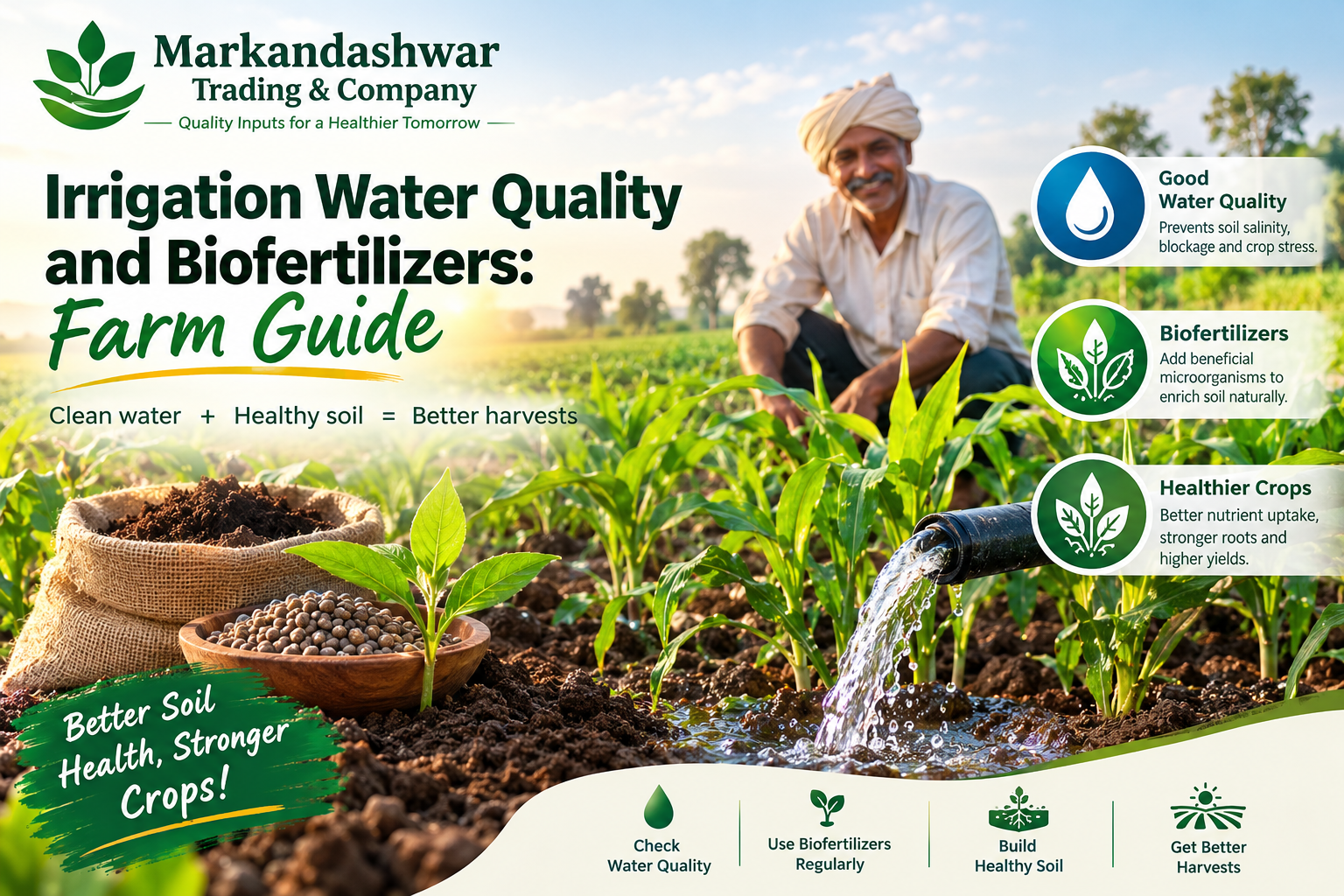
Irrigation Water Quality and Biofertilizers: A Complete Farm Guide
Healthy crops begin with healthy soil and good-quality irrigation water. Farmers often focus on fertilizers and crop protection products, but water quality and beneficial soil microorganisms are also important for plant growth. Understanding irrigation water quality and biofertilizers can help farmers improve nutrient availability, maintain soil health, and support sustainable agricultural practices.
In this guide, we will explain why irrigation water quality matters, how biofertilizers work, which factors farmers should monitor, and how these two elements can work together to support better crop management.
What Is Irrigation Water Quality?
Irrigation water quality refers to the suitability of water for agricultural use. Water supplies may contain dissolved salts, minerals, sodium, and other substances that affect soil conditions and crop development.
Water that is suitable for one crop or soil type may not be suitable for another. Therefore, farmers should assess their water quality according to the crop, soil characteristics, drainage conditions, and local climate.
Important Factors Affecting Irrigation Water Quality
1. Water salinity
Salinity refers to the concentration of dissolved salts in water. Excessive salinity can make it more difficult for plant roots to absorb water and may reduce crop growth.
2. Sodium concentration
High sodium levels can affect soil structure, reduce water infiltration, and make it harder for roots to receive sufficient moisture. Testing sodium-related indicators, such as the Sodium Adsorption Ratio (SAR), can help identify potential risks.
3. Water pH
Water pH indicates whether water is acidic or alkaline. Irrigation water pH can influence nutrient availability and the performance of certain agricultural inputs. Its effects should be evaluated alongside soil pH and other water-quality measurements.
4. Bicarbonates and other dissolved minerals
High bicarbonate concentrations and certain dissolved minerals may contribute to soil-related problems or interfere with irrigation equipment. Regular testing helps farmers identify these concerns early.
5. Potential contaminants
Depending on the water source, irrigation water may contain unwanted chemicals, heavy metals, or disease-causing microorganisms. Water from uncertain sources should be tested for relevant contaminants before agricultural use.
Why Is Irrigation Water Quality Important for Farmers?
Good irrigation water management supports healthy soil and efficient crop production. Poor-quality water, on the other hand, may gradually increase soil salinity, affect soil structure, and create difficulties in nutrient management.
Regular water testing helps farmers:
- Identify excessive salts and sodium.
- Understand whether the water is suitable for particular crops.
- Reduce the risk of long-term soil degradation.
- Make informed decisions about irrigation and soil amendments.
- Protect irrigation systems from certain water-related problems.
- Improve overall farm management through better water-use decisions.
Farmers should consider laboratory test results before choosing corrective measures. The right solution depends on the specific problem, soil type, crop requirements, and water source.
What Are Biofertilizers?
Biofertilizers are agricultural products containing beneficial microorganisms that help plants obtain or use nutrients. Depending on the product, these microorganisms may fix atmospheric nitrogen, make certain forms of phosphorus more available, or support nutrient cycling around plant roots.
Unlike conventional fertilizers that directly supply mineral nutrients, biofertilizers work through biological processes. They are used as part of an integrated nutrient management plan and may complement organic manures and recommended fertilizers.
Common Types of Biofertilizers
1. Rhizobium
Rhizobium bacteria form beneficial associations with the roots of suitable leguminous crops, such as chickpeas and peas. They help fix atmospheric nitrogen under appropriate conditions.
2. Azotobacter
Azotobacter-based products are used in certain non-leguminous cropping systems. Their contribution depends on the strain, crop, soil conditions, and product quality.
3. Azospirillum
Azospirillum associates with the roots of several grasses and cereal crops. Certain strains can contribute to nitrogen fixation and support root development.
4. Phosphate-Solubilizing Bacteria (PSB)
PSB products contain microorganisms that can help make some forms of soil phosphorus more available to plants. Their effectiveness depends on soil conditions and the specific product.
5. Potassium-Mobilizing Microorganisms
These products aim to help release or mobilize certain forms of potassium in soil minerals. Results vary with the microorganism, soil mineral composition, and field conditions.
Benefits of Biofertilizers in Sustainable Agriculture
Using suitable biofertilizers can support soil biological activity and improve nutrient management. Their main benefits may include:
- Improved nutrient availability: Certain microorganisms help plants access specific nutrients.
- Support for root development: Some beneficial microbes influence root growth and nutrient absorption.
- Better soil biological health: Appropriate products can contribute to useful microbial activity.
- Integrated nutrient management: Biofertilizers may complement recommended fertilizers and organic matter.
- Sustainable farming practices: They can help farmers incorporate biological approaches into crop nutrition.
Biofertilizers are not a universal replacement for chemical fertilizers. Farmers should choose products based on crop requirements, soil tests, and recommendations from qualified agricultural experts.
- How Irrigation Water Quality and Biofertilizers Work Together
Irrigation water quality and biofertilizers are connected through the soil environment. Water influences soil moisture, salinity, and the conditions around plant roots. These factors also influence the survival and activity of beneficial microorganisms.
When water quality is suitable and biofertilizers are used correctly, farmers can create better conditions for nutrient management and root development.
However, highly saline water, unsuitable pH conditions, or certain contaminants may affect microbial performance. Biofertilizers cannot independently correct every water-quality problem.
For better results, farmers should follow these practices:
- Test irrigation water: Check electrical conductivity (EC), pH, sodium-related indicators, and other relevant parameters.
- Understand soil conditions: Soil testing helps identify salinity, nutrient deficiencies, and other limitations.
- Select the correct biofertilizer: Match the product to the crop and its nutrient requirements.
- Follow product instructions: Use the recommended application method, dosage, and storage conditions.
- Manage irrigation carefully: Use an appropriate irrigation schedule and ensure suitable drainage.
- Monitor crop performance: Observe crop growth and review soil and water tests when necessary.
Best Practices for Using Biofertilizers on Your Farm
Correct handling is essential for biofertilizer performance. Farmers should purchase products from reliable suppliers and check the product label, expiry date, recommended crop, and storage requirements.
Avoid exposing microbial products to unsuitable temperatures or direct sunlight when the label advises against it. Do not mix biofertilizers with pesticides, fungicides, or concentrated fertilizer solutions unless the manufacturer confirms compatibility.
Seed treatment, soil application, and root treatment are common application methods, but the correct method depends on the product and crop. Always follow the manufacturer’s directions and local agricultural recommendations.
For farmers using drip irrigation, compatibility should be confirmed before introducing microbial products into the irrigation system. Filters, water chemistry, and application requirements may affect product use.
Common Mistakes Farmers Should Avoid
Farmers can improve their results by avoiding a few common mistakes:
- Using irrigation water without checking its quality.
- Applying the same biofertilizer to every crop.
- Ignoring soil salinity and drainage problems.
- Using expired or poorly stored microbial products.
- Expecting biofertilizers to replace all nutrient requirements.
- Mixing agricultural products without checking compatibility.
- Applying corrective treatments without understanding the actual problem.
A planned approach based on soil testing, water analysis, and crop requirements is more reliable than choosing products without sufficient information.
Conclusion
Irrigation water quality and biofertilizers are important considerations in modern agriculture. Suitable irrigation water supports a healthier root environment, while beneficial microorganisms can help improve nutrient availability and support soil biological activity.