Mycorrhizal Fungi in Agriculture: A Root & Soil Guide
Healthy soil is the foundation of successful farming. Along with nutrients, water, and sunlight, beneficial soil microorganisms play an important role in plant growth. One such group is mycorrhizal fungi, which form a natural partnership with plant roots and help plants access nutrients and water from the surrounding soil.
Understanding mycorrhizal fungi in agriculture can help farmers make better decisions about soil health, crop nutrition, and sustainable farming practices. In this guide, we will explore how mycorrhizal fungi work, their benefits, their agricultural applications, and how farmers can support these useful organisms.
What Are Mycorrhizal Fungi?
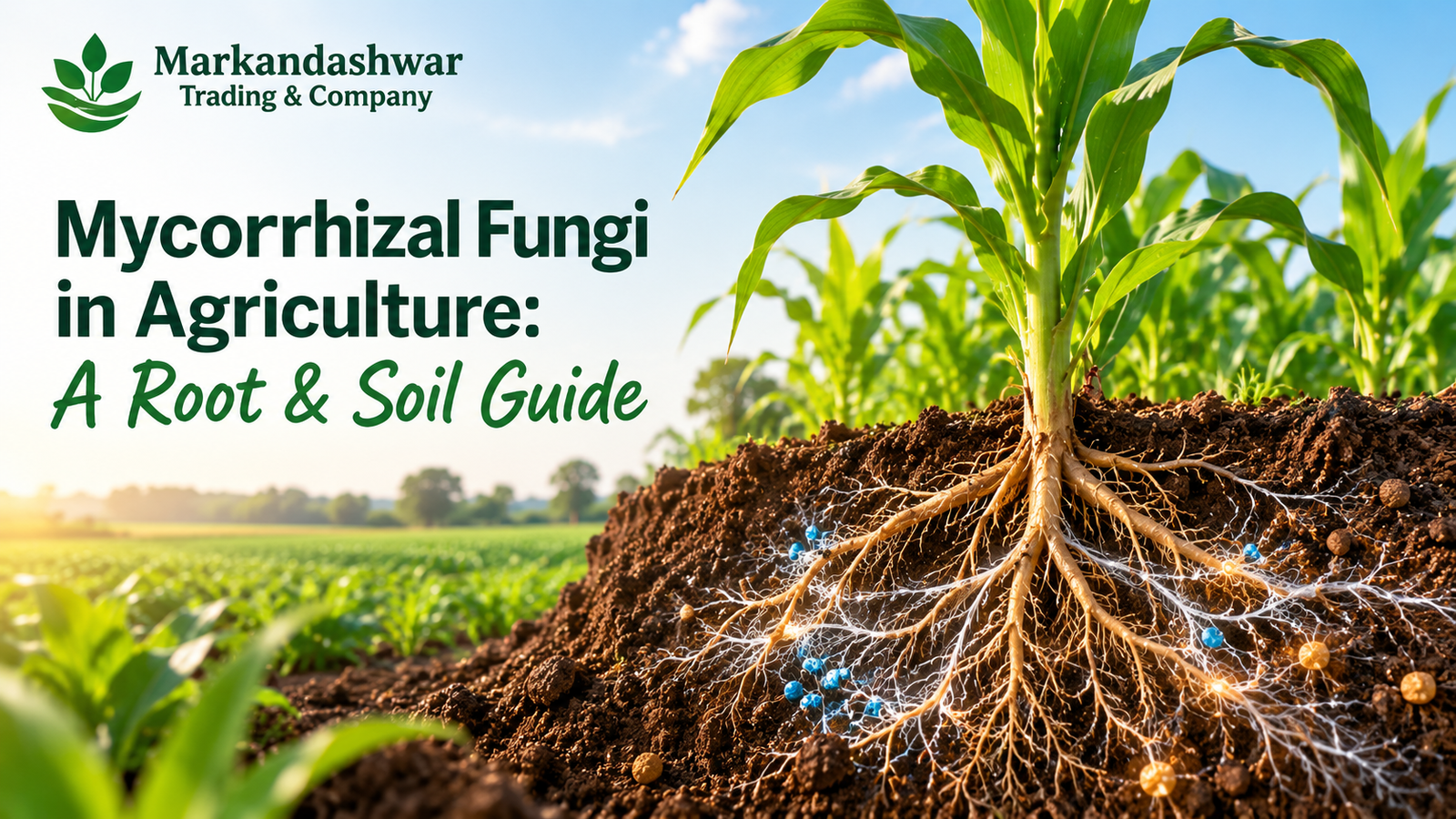
Mycorrhizal Fungi in Agriculture are beneficial fungi that form a close relationship with plant roots. The word mycorrhiza describes this partnership between a fungus and a plant root.
These fungi develop tiny, thread-like structures called hyphae. The hyphae extend into the soil beyond the immediate root area, helping plants explore a larger volume of soil for nutrients and moisture.
In return, the plant supplies the fungi with sugars and other carbon compounds produced through photosynthesis. Both organisms benefit from this natural exchange.
According to agricultural soil research, Mycorrhizal fungi in agriculture are particularly important for phosphorus uptake and can also contribute to water absorption, soil structure, and plant resilience. However, the benefits depend on the crop, soil conditions, and fungal species.
How Do Mycorrhizal Fungi Work in Soil?
Mycorrhizal Fungi in Agriculture work through a natural partnership with plant roots. Their underground network helps connect plant roots with resources present in the surrounding soil.
Here is how the process works:
- Fungal colonization: Compatible fungi establish a relationship with the roots of a suitable plant.
- Hyphal growth: Fine fungal threads extend into the surrounding soil beyond the root surface.
- Nutrient absorption: The fungal network helps access nutrients, especially phosphorus, that may be difficult for roots to reach directly.
- Water exploration: The hyphae can explore small soil spaces and help plants access additional moisture.
- Exchange of resources: The plant supplies carbon compounds to the fungi, while the fungi provide access to soil resources.
This relationship can improve the efficiency with which some plants obtain nutrients from the soil. It does not mean that the plant receives unlimited nutrients or no longer needs appropriate fertilizer management.
Major Benefits of Mycorrhizal Fungi in Agriculture
Mycorrhizal fungi in agriculture can support crop growth and soil health when the right fungi interact with compatible plants under suitable conditions.
1. Improved Nutrient Uptake
One of the best-known benefits of Mycorrhizal Fungi in Agriculture is their role in phosphorus uptake. Phosphorus is essential for root development, energy transfer, and plant growth.
Because phosphorus moves slowly through soil, plants may use up the phosphorus immediately surrounding their roots. Fungal hyphae can explore soil beyond this depleted area and help transport additional phosphorus to the plant.
Some mycorrhizal associations also contribute to the uptake of other nutrients, including certain micronutrients.
2. Better Root Development
Mycorrhizal fungi in agriculture extend the effective reach of a plant’s root system. This larger network can help plants access resources from a wider area of soil.
Although the fungi do not replace the plant’s roots, they work alongside them to improve access to nutrients and water. This can support healthy plant development when other growing conditions are suitable.
3. Improved Water Absorption
Water availability is an important factor in crop production. Mycorrhizal hyphae can explore small soil pores that plant roots may not reach easily.
This can help some plants use available soil moisture more effectively and may improve their tolerance to certain water-related stresses. However, mycorrhizal fungi cannot replace irrigation during severe water shortages.
4. Support for Soil Structure
Healthy soil contains a complex community of roots, fungi, bacteria, and other organisms. Mycorrhizal Fungi in Agriculture contribute to this system through their underground hyphal networks and their influence on soil aggregation.
Better soil aggregation can support pore formation, water movement, and resistance to erosion. These benefits depend on soil type and overall farm management.
5. Improved Plant Stress Tolerance
Some mycorrhizal associations can help plants respond to environmental stresses, including drought, salinity, and certain nutrient limitations.
The results are not the same for every crop or fungal strain. Farmers should therefore view mycorrhizal fungi as one part of a broader strategy for managing soil conditions and crop health.
6. Support for Sustainable Agriculture
Mycorrhizal fungi in agriculture are a natural part of many agricultural soils. Supporting these organisms through suitable farming practices can contribute to biological soil health and nutrient management.
Their use may improve nutrient-use efficiency in certain conditions, but they should not automatically be considered a complete replacement for conventional fertilizers.
Types of Mycorrhizal Fungi
Different groups of Mycorrhizal Fungi in Agriculture form partnerships with different plants. Understanding these groups helps explain why a product suitable for one crop may not work equally well for another.
1. Arbuscular Mycorrhizal Fungi (AMF)
Arbuscular Mycorrhizal Fungi in Agriculture are among the most important groups in agriculture. They form associations with the roots of many crops and are especially well known for helping plants access phosphorus.
These fungi are relevant to many cereals, legumes, vegetables, and other agricultural plants, although the degree of benefit varies.
2. Ectomycorrhizal Fungi
Ectomycorrhizal fungi form a different type of association, mainly with the roots of many trees and woody plants.
They are especially important in forestry, orchards involving compatible tree species, and natural woodland ecosystems. Their plant partners differ from those of many common agricultural AMF products.
3. Other Specialized Mycorrhizal Associations
Some plant groups form specialized relationships with other mycorrhizal fungi. Orchids, for example, have distinctive fungal partnerships that are important during their development.
For crop farming, the most relevant type depends on the plant species and the intended application.
Which Crops Can Benefit from Mycorrhizal Fungi?
Mycorrhizal fungi in agricultural plants can form mycorrhizal associations, but the level of dependence differs among crops.
Examples of crops that commonly form associations with arbuscular Mycorrhizal Fungi in Agriculture include:
- Cereals: Wheat, maize, and many other cereal crops.
- Legumes: Chickpea, soybean, and several bean crops.
- Vegetables: Tomato, pepper, and other compatible vegetables.
- Horticultural crops: Many fruit and nursery plants, depending on the species.
- Other field crops: Some oilseed and forage crops.
Not every crop benefits equally. Plants in the brassica family, including mustard, cabbage, and cauliflower, generally do not form the usual arbuscular mycorrhizal associations. Crop compatibility should be checked before selecting a mycorrhizal product.
How to Support Mycorrhizal Fungi in Agriculture on Your Farm
Farmers can support beneficial soil fungi through practical soil-management decisions.
1. Reduce Unnecessary Soil Disturbance
Frequent and intensive tillage can disrupt fungal hyphae and the soil structure they help maintain. Where suitable for the farming system, reduced tillage or conservation practices may help preserve these networks.
2. Maintain Living Roots
Mycorrhizal fungi in agriculture depend on compatible plants for carbon. Suitable crop rotations and cover crops can help maintain living roots in the soil for more of the year.
Choose cover crops according to local conditions and compatibility with the fungal group you want to support.
3. Maintain Balanced Nutrient Management
Excessive phosphorus availability can reduce the plant’s incentive to maintain some mycorrhizal partnerships. However, phosphorus deficiency can also harm crop growth.
Use soil testing and recommended fertilizer rates to maintain an appropriate nutrient balance instead of making unnecessary changes to fertilizer applications.
4. Protect Soil Organic Matter
Retaining suitable crop residues, adding well-managed organic matter, and reducing erosion can help maintain a healthy soil ecosystem. These practices support many beneficial soil organisms, although they do not guarantee a particular level of mycorrhizal activity.
5. Use Compatible Products Correctly
If you choose a commercial mycorrhizal biofertilizer, check the crop compatibility, fungal species, product quality, expiry date, and storage instructions.
Some fungicides and other agricultural inputs may affect beneficial fungi. Check product compatibility with the manufacturer or a qualified agricultural adviser before combining treatments.
Mycorrhizal Fungi vs. Conventional Fertilizers
Mycorrhizal fungi and conventional fertilizers perform different functions in crop nutrition.
| Feature | Mycorrhizal fungi | Conventional fertilizers |
|---|---|---|
| Main role | Help plants access certain soil resources | Supply nutrients directly |
| How they work | Through a living relationship with plant roots | Through nutrients available for plant uptake |
| Nutrient contribution | Depends on soil, crop, and fungal compatibility | Depends on nutrient composition and application |
| Effect on soil biology | Contribute to biological soil processes | Effects vary by fertilizer type and management |
| Best use | As part of suitable soil and crop management | According to crop requirements and soil tests |
These approaches can complement each other. A suitable nutrient-management plan considers soil test results, crop requirements, and the potential contribution of beneficial microorganisms.
Common Mistakes to Avoid When Using Mycorrhizal Products
To get the best possible results, farmers should avoid the following mistakes:
- Applying a product without checking crop compatibility.
- Assuming all mycorrhizal products contain the same fungal species.
- Using expired or improperly stored products.
- Ignoring soil fertility and crop nutrient requirements.
- Applying fungicides or other inputs without checking compatibility.
- Expecting the product to correct every soil problem.
- Assuming better crop yields are guaranteed in every field.
Mycorrhizal products should be selected based on credible product information and local agricultural recommendations. Naturally occurring fungi may already be present in many soils, so additional inoculation is not always necessary.
Conclusion
Mycorrhizal fungi in agriculture play an important role in the relationship between plants and soil. By extending the effective reach of plant roots, these beneficial fungi can help crops access phosphorus, explore soil moisture, and contribute to soil structure and plant resilience.
Farmers can support these natural partnerships through appropriate crop rotations, reduced unnecessary soil disturbance, balanced nutrient management, and careful product selection.
At Markandashwar Trading & Company, we believe that understanding soil health and choosing suitable agricultural inputs are important steps toward responsible farming. Consider mycorrhizal products as part of a crop-specific nutrient-management plan, supported by soil testing and expert guidance.
Healthy roots, living soil, and balanced nutrition are valuable foundations for sustainable agriculture.
Frequently Asked Questions (FAQs)
1. What are mycorrhizal fungi in agriculture?
Mycorrhizal fungi in agriculture are beneficial fungi that form partnerships with plant roots. They help plants access soil nutrients and water through their underground hyphal networks.
2. What is the main benefit of mycorrhizal fungi?
One of their main benefits is helping plants access phosphorus beyond the immediate root zone. They may also support water uptake, soil aggregation, and tolerance to certain environmental stresses.
3. Are mycorrhizal fungi in agriculture suitable for all crops?
No. Many crops form mycorrhizal associations, but some plants, including most brassicas such as mustard and cabbage, generally do not form the common arbuscular associations. Check crop compatibility before application.
4. Can mycorrhizal fungi replace fertilizers?
No. They help plants access certain nutrients but do not supply every nutrient required for crop growth. Soil testing and balanced fertilizer management remain important.
5. How can farmers increase mycorrhizal activity in soil?
Suitable practices include reducing unnecessary tillage, maintaining compatible living roots, using diverse crop rotations, and managing nutrients according to soil tests.
6. When should a mycorrhizal biofertilizer be applied?
Application timing and method depend on the product and crop. Follow the label and local agricultural recommendations, and ensure the product is placed or applied in the way specified by its manufacturer.
7. Do mycorrhizal fungi improve crop yield?
They can improve growth and yield in some crops and conditions, but results vary. Crop compatibility, soil properties, weather, nutrient management, and the quality of the fungal product all influence the outcome.